Are Sugar-Free Drinks Like Diet Coke a Healthier Choice?

What makes a beverage “sugar-free”?
Sugar-free sodas rely on artificial or non-nutritive sweeteners to mimic the taste of sugar without adding calories. These include:
- Aspartame, used in Diet Coke and Diet Pepsi
- Sucralose, found in Splenda, also used in soft drinks
- Acesulfame potassium (Ace-K), often combined with other sweeteners
- Stevia and monk fruit extract, plant-based alternatives
Because these sweeteners add little to no sugar or calories, they are often marketed as healthier substitutes for regular soda. But metabolism is more than just calorie math, and the long-term effects of these sweeteners are still being studied.
Are sugar-free sodas better for blood sugar?
Sugar-free drinks don’t spike blood sugar the way sodas do. For people managing diabetes, that can make them seem like a better choice, though long-term research paints a more complex picture.
A review published in the Canadian Medical Association Journal found that people who regularly consume artificial sweeteners still had a higher risk of weight gain, type 2 diabetes, and heart disease, despite taking in fewer calories overall.
Do diet sodas affect gut health?
Emerging research suggests that artificial sweeteners may disrupt the gut microbiome — the trillions of bacteria that help regulate digestion, inflammation, and immune function.
One study published in Nature found that even short-term consumption of artificial sweeteners like saccharin and sucralose altered the gut microbiota and led to glucose intolerance.
Gut bacteria do far more than help digest food. They can affect how our bodies absorb nutrients and manage metabolism, influence inflammation, and even send signals to the brain that may shape mood and stress.
What about weight loss?
Sugar-free drinks are marketed as a weight-friendly option. In the short term, replacing regular soda with a sugar-free version can reduce calorie intake. But long-term effects are mixed.
A study published in the Journal of the American Geriatrics Society found that adults with overweight who drank diet soda every day had a significantly larger waist circumference than those who didn’t.
Why the disconnect? Scientists suspect that artificial sweeteners may heighten cravings for sweetness, disrupt appetite-regulating hormones, or interfere with the body’s hunger cues.
Comparing Diet Coke vs. regular coke
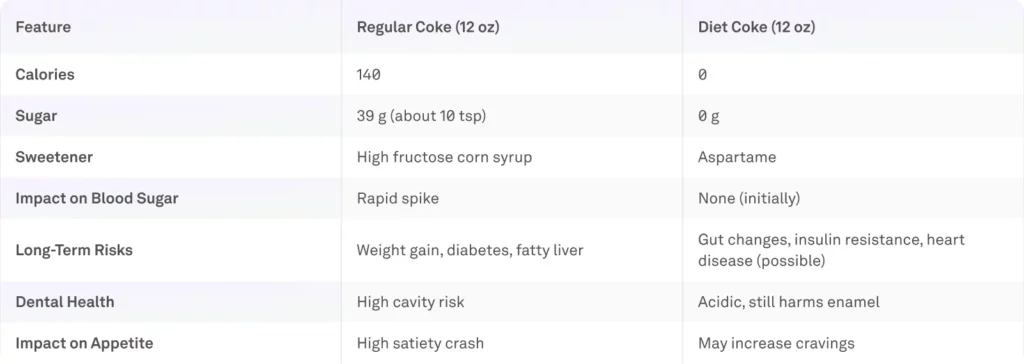
Regular soda is linked to obesity and type 2 diabetes, largely because of its high sugar content and empty calories. Diet sodas may avoid the sugar spike, but they are not risk-free. Swapping one for the other doesn’t eliminate health concerns — it may just change the type of risk.
What do health experts say?
- The World Health Organization (WHO) recommends against using artificial sweeteners for weight control or disease prevention, citing potential long-term harms and limited benefit.
- The National Institutes of Health (NIH) notes that while these drinks can be useful as a short-term strategy, they are not a long-term substitute for water or unsweetened beverages.
- The American Heart Association suggests that if you consume sweetened drinks (sugar-free or otherwise), you should do so in moderation and, when possible, replace them with water, tea, or other unsweetened drinks.
Can diet drinks impact the brain and mental health?
Some early research points to possible links.
A 2017 study found that older adults who drank diet drinks every day had a higher risk of stroke and dementia compared with those who drank them rarely.
Researchers are also exploring how beverages may affect mood and mental health. A study published in Nutrients found that daily intake of both sugar-sweetened and artificially sweetened soft drinks was associated with higher levels of anxiety.
For now, it might be a good idea to enjoy diet drinks in moderation while we wait for more answers from science.
What are good alternatives to sugar-free drinks?
You don’t need to quit all at once, but small shifts can make a big difference. Healthier options include:
- Sparkling water flavored with real fruit
- Herbal teas, served hot or chilled
- Fruit-infused water
- Cold brew tea with no added sweeteners
- Kombucha (watch the sugar content)
Research shows that replacing a daily serving of a sugary beverage with water, unsweetened tea or coffee cuts the risk of developing diabetes by as much as 14 to 25 percent.
Final thoughts
Sugar-free sodas like Diet Coke may seem like a better choice, and in some ways, they are. But “better” doesn’t mean “safer.”
While these drinks skip the sugar and calories, artificial sweeteners may come with their own health concerns, especially when consumed daily over many years. From gut disruption to weight gain and heart risk, the science suggests that moderation is key.
For better long-term health, aim to drink more water. When you do enjoy sweetened beverages, whether sugar-free or not, treat them as an occasional treat rather than a daily habit.